About Us

2012 to 2020
Research
Between 2012 and 2020, Dr. Ruben Hünig conducted research at KIT and ZSW Stuttgart on bionically inspired anti-reflective structures. Natural models such as flower petals served as the basis for coupling light specifically into solar cells to minimize reflections. This research laid the foundation for today’s anti-glare technology from Phytonics.

2020 to 2021
Company Formation
From 2020 to 2021, research became reality: the founding team prepared the spin-off from KIT and established Phytonics GmbH in 2021.
Supported by funding programs such as EXIST, a young high-tech company was created with the goal of bringing the developed technology to market readiness and making photovoltaics glare-free.

2022
Development
In 2022, Phytonics focused on the further development and optimization of the technology for use on full-size solar modules. Initial pilot projects were successfully implemented, and the technological properties – especially glare reduction and light yield – were validated in the field. At the same time, the foundation for the later market launch was laid.

2022 and 2023
Prices
In 2022 and 2023, Phytonics was recognized for its technological developments. In 2022, the team won 1st place at the KIT Founder Pitch during the NEULAND Innovation Day, followed by the KIT Innovation Award in 2023. These awards honor the successful transfer of bionic research into market-ready solar technology.
2023
Pilot project
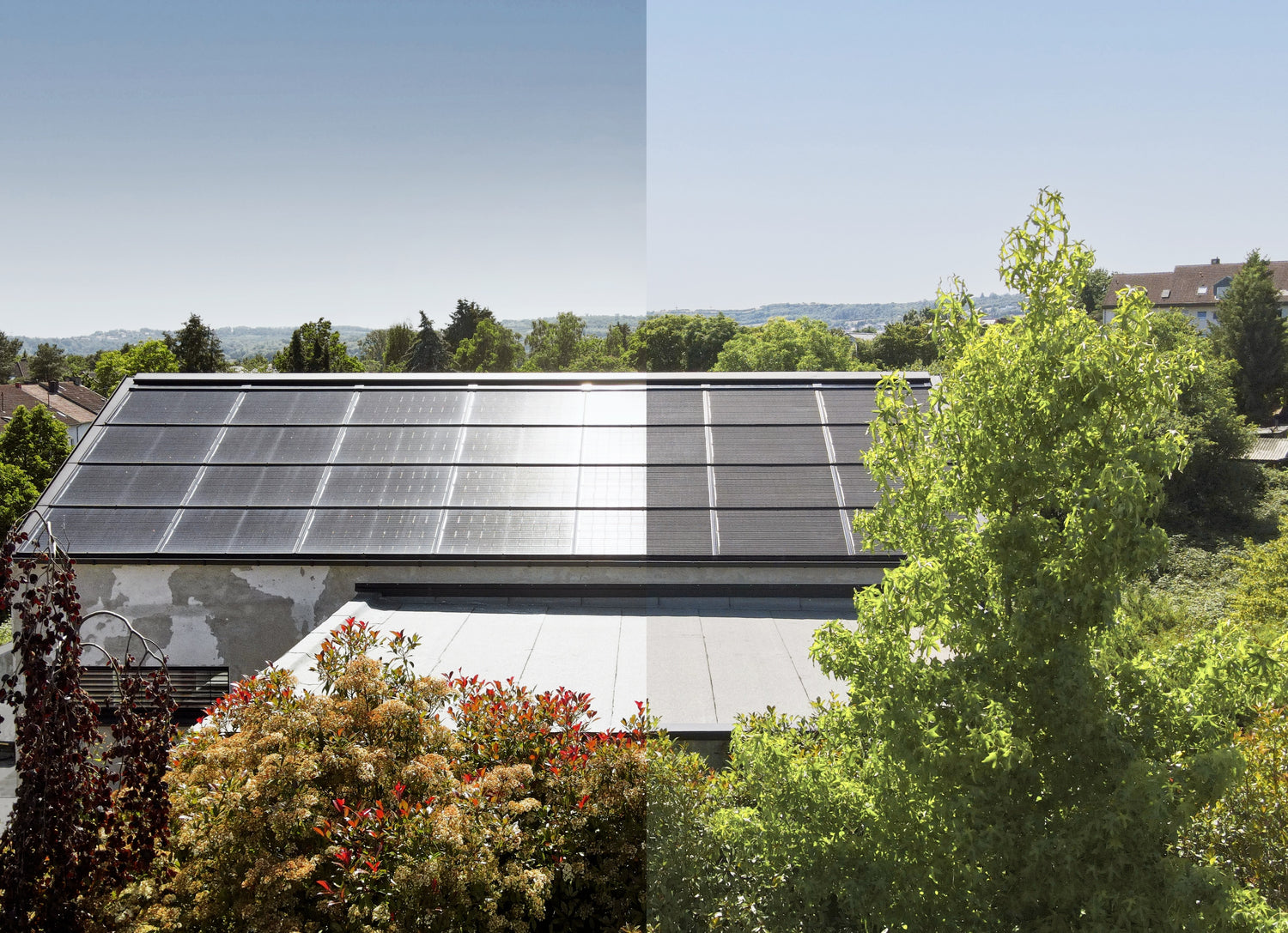
In 2023, Phytonics completed its first successful pilot project: the roof of a hillside residential building in Saarland was deglared. Thanks to the special surface structure of the coating, disturbing reflections were significantly reduced, restoring neighborhood harmony – a crucial step for the social acceptance of PV systems in sensitive locations and an important milestone on the path to market readiness.

2024
Market launch
In 2024, Phytonics officially launched the distribution of the anti-glare film. After intensive development work and successful pilot projects, the technology was released to the market. Since then, private customers, installers, and operators of larger systems have been able to rely on an innovative solution that effectively reduces disruptive glare while largely preserving the performance of solar modules.
Blog posts
View all-

Failed Solar Glare Hazard Analysis? How to Reso...
Facing a failed solar glare study or FAA rejection? Learn how to eliminate "Yellow Glare" in ForgeSolar using native Phytonics presets and secure your permit.
Failed Solar Glare Hazard Analysis? How to Reso...
Facing a failed solar glare study or FAA rejection? Learn how to eliminate "Yellow Glare" in ForgeSolar using native Phytonics presets and secure your permit.
-

Solar Glare in the US? Resolve Disputes & HOA R...
Having trouble with neighbors or your HOA in the US due to glare from your solar panels? Learn how to resolve glare disputes fast with bionic anti-glare film – without...
Solar Glare in the US? Resolve Disputes & HOA R...
Having trouble with neighbors or your HOA in the US due to glare from your solar panels? Learn how to resolve glare disputes fast with bionic anti-glare film – without...
-

Intersolar Europe 2026: Anti-Glare Takes Center...
PV expansion is reaching new heights – and with it, the relevance of anti-glare solutions. As more critical surfaces are being utilized, glare-freedom is becoming a permanent planning factor for...
Intersolar Europe 2026: Anti-Glare Takes Center...
PV expansion is reaching new heights – and with it, the relevance of anti-glare solutions. As more critical surfaces are being utilized, glare-freedom is becoming a permanent planning factor for...


